


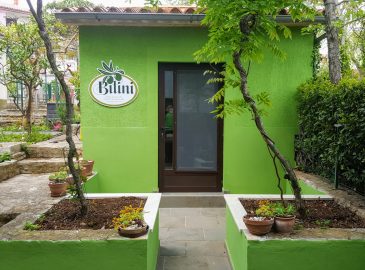
Olive oil tasting Pula: visit us and try our EVOO Bilini
Our olive oil tasting room in Pula is located at Vidikovac 68. Opening Hours: Monday–Saturday, 10:00 AM to 1:00 PM
Many people who taste high-quality extra virgin olive oil for the first time are surprised by the slight tingling sensation in the throat or a mild bitterness. Some even assume that something is wrong with the oil. In reality, the opposite is true – this sensation is often a sign of fresh, high-quality olive oil rich in natural antioxidants.
In premium extra virgin olive oils such as extra virgin olive oil Bilini, polyphenols are one of the most important indicators of quality, freshness, and potential health benefits.
If you are wondering what polyphenols in olive oil actually are, why olive oil sometimes causes a peppery sensation in the throat, and what chemical analysis results can reveal about olive oil quality, continue reading.
Polyphenols are natural plant compounds that act as antioxidants. Olive trees produce them as a natural defense against stress, UV radiation, diseases, and pests, and some of these compounds eventually end up in olive oil.
Polyphenols are responsible for giving high-quality extra virgin olive oil:
In general, the fresher the olive oil and the better the processing method, the higher the content of beneficial phenolic compounds.
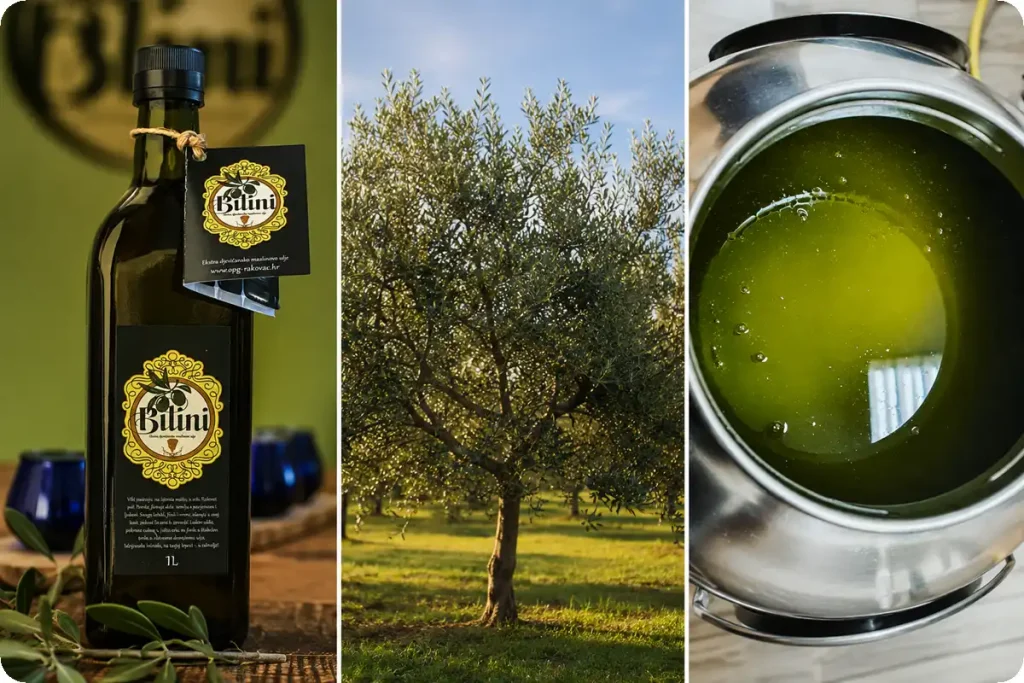
If you have ever tasted fresh extra virgin olive oil and experienced a slight burning or peppery sensation while swallowing, you have most likely tasted olive oil rich in polyphenols.
A compound called oleocanthal is particularly responsible for this sensation. Interestingly, scientists have discovered that oleocanthal acts in a similar way to certain anti-inflammatory compounds.
Of course, the intensity of the throat tingling can vary depending on:
Early harvest olives often produce oils with stronger bitterness and pungency, but also with a higher polyphenol content.
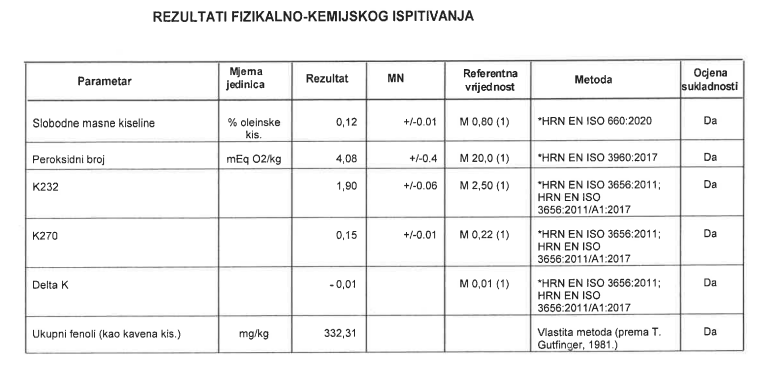
The chemical analysis of Bilini extra virgin olive oil (harvest 2025) revealed excellent results.
The most important parameters were:
For comparison, the legal limit for free fatty acids in extra virgin olive oil is 0.8, while the peroxide value limit is 20.
The values achieved by Bilini olive oil are significantly better than the maximum permitted limits, indicating:
We are especially proud of the total phenol result of 332.31 mg/kg, since polyphenols play an important role in preserving both the quality and character of olive oil.
You can view the complete chemical analysis here:
Free fatty acids are one of the basic indicators of olive oil quality.
Their value increases when:
For premium extra virgin olive oil, the goal is to achieve the lowest possible value.
The result of 0.12 shows that the olives used for Bilini olive oil were:
The peroxide value indicates the initial stage of oil oxidation.
In other words, it shows how fresh the olive oil is and how much it has been exposed to spoilage processes.
A lower value means:
A peroxide value of 4.08 is an excellent result and confirms that Bilini olive oil has been exceptionally well preserved.
Although olive oil is not a medicine, numerous scientific studies have examined the potential connection between polyphenols in olive oil and positive effects on human health.
Polyphenols are often associated with:
This is one of the main reasons why high-quality extra virgin olive oil holds such an important place in Mediterranean cuisine and lifestyle.
You can learn more about what extra virgin olive oil actually means in our article:
👉 https://opg-rakovac.hr/en/blog-en/healthy-food/what-is-extra-virgin-olive-oil/
To preserve its aroma and beneficial compounds, high-quality extra virgin olive oil is best used:
Of course, it can also be used for cooking, but for the full experience of its aromas and character, it is recommended to consume it in cold or lightly warmed dishes.
A slight bitterness and throat tingling sensation are not flaws in high-quality extra virgin olive oil – quite the opposite. They are often signs of fresh olive oil rich in natural polyphenols.
The chemical analysis of Bilini olive oil revealed:
These results confirm the quality of olive oil produced through careful olive cultivation, timely harvesting, and rapid processing of the olives.
So if you feel a slight peppery sensation in your throat while tasting olive oil, you may have just experienced what olive oil enthusiasts value most – fresh, high-quality extra virgin olive oil rich in polyphenols.
Our olive oil tasting room in Pula is located at Vidikovac 68. Opening Hours: Monday–Saturday, 10:00 AM to 1:00 PM
Polyphenols in olive oil are responsible for the bitterness, pungency, and quality of extra virgin olive oil. Discover what the EVOO Bilini chemical analysis reveals.
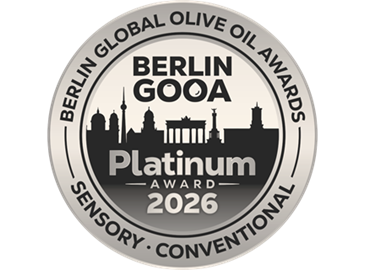
We are proud to announce that our extra virgin olive oil Bilini has won the Platinum Award at the prestigious international competition Berlin GOOA 2026
Leave a Reply